Digital Transformation & AI: The Art of Doing It Well (or Not)

Share this insight


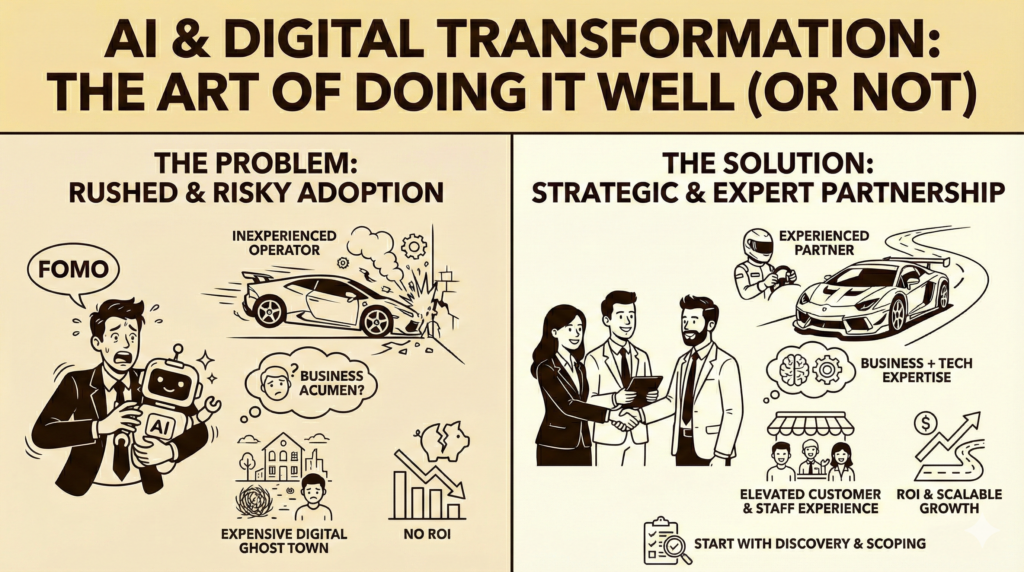
Let’s be honest, in the hallowed halls of the C-Suite, it’s getting harder to ignore the whispers (or perhaps, the outright shouts) about AI and digital transformation. It’s the topic du jour, the shiny new toy everyone must have, often before they’ve even figured out what it does or where the batteries go. The sheer, unprecedented rise of AI has catalysed what can only be described as a tsunami of desire for organisational change within the business community. And who can blame them? The fear of missing out (FOMO) is a powerful motivator, second only, perhaps, to the fear of a quarterly earnings call gone south.
But here’s the rub, and it’s a rather large, uncomfortable one: while the desire for transformation is at an all-time high, the actual ability to execute it well seems to be in an increasingly inverse proportion. We’re witnessing a fascinating paradox where the sheer volume of available technology is matched only by the increasing scarcity of availability within organisations that truly understand how to wield it effectively.
Entrusting this level of change to an inexperienced operator is like taking a Lamborghini, switching off the traction control and handing the keys to an inexperienced driver and setting them off on a windy country road. It’s just not likely to end well. However, give those same keys to a professional rally driver, and the outcome is likely to be entirely different.
The Elusive Intersection: Business, Tech, Customers, and Staff
The real challenge, the one that keeps us at The Distillery both busy and occasionally bewildered, is that there are only so many organisations that genuinely grasp the intricate intersection of business acumen and technology expertise. It’s not just about knowing what a neural network is; it’s about understanding how that network impacts your customer’s journey, or how it might make your staff’s lives either a dream or a living nightmare.
Too often, the conversation starts with “We need AI!” and ends with “Why isn’t our bottom line looking like a hockey stick?” The missing piece is typically the understanding of how these powerful new tools manage the impacts on your customers and staff. Remember, customers are the very reason you have a business, and staff are the indispensable engine that serves those customers. Neglect either, and your grand digital transformation might just transform your business into a very expensive, very digital ghost town. It’s not enough to automate; you must elevate.
The Art of the Match: Finding Your Transformation Partner
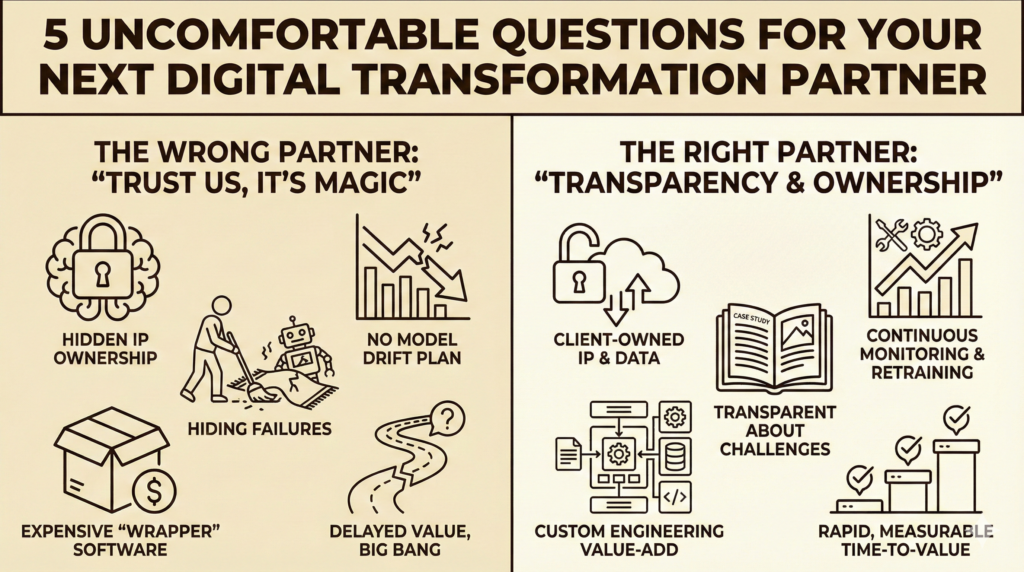
So, if you’re a C-Suite leader contemplating this brave new world, the critical question isn’t if you should transform, but who you should transform with. Organisations looking for a digital transformation partner need to match any potential partner with the right level of:
- Business Acumen: Do they speak your language, understand your market, and grasp your strategic objectives beyond just the tech? Can they tell the difference between a P&L statement and a pixelated cat video? (Hopefully, yes.)
- Consulting Expertise: Are they adept at guiding complex change, navigating internal politics, and fostering adoption, or are they just glorified coders with a fancy PowerPoint?
- Technology Expertise: This is the obvious one, but it’s about more than just knowing the latest buzzwords. It’s about practical application, scalability, privacy, security and ensuring the solution fits your specific needs, not just what they happen to sell.
Cultural Alignment: Can they genuinely align a replacement solution with your culture and core reasons for success? A perfect technical solution can fall flat on its face if it clashes with the very fabric of your organisation.
The Looming Scarcity: Don't Get Left Behind
Here’s a gentle, perhaps slightly unsettling, thought for your morning coffee: if you aren’t already engaging with someone to begin your digital transformation journey, you might soon struggle to find a company that can truly understand your business. The good ones, those rare gems that combine the business savvy with the tech wizardry and the human touch, are rapidly becoming fully booked. It’s not a scare tactic; it’s simply the economics of supply and demand for genuine expertise. The market for superficial “AI solutions” is saturated, but the market for effective, impactful transformation partners is tightening faster than a pair of skinny jeans after a holiday feast.
The Minimum Viable Step: Discovery and Scoping
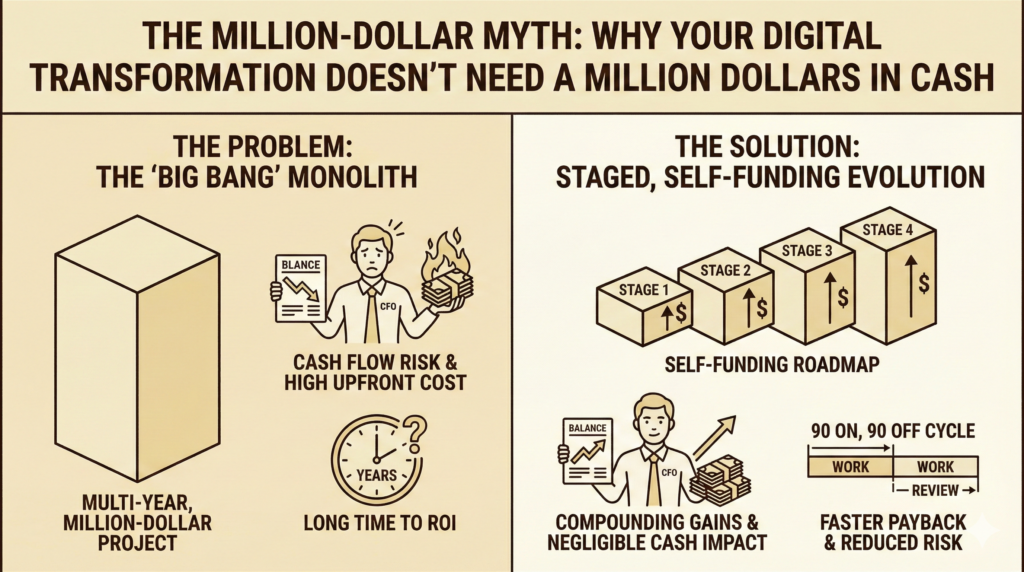
Even if you can’t commit to a full-blown transformation program right now – perhaps the budget fairy hasn’t visited, or the board is still debating the merits of carrier pigeons for internal communication – there’s a crucial minimum step you absolutely should take. Engage someone to run a discovery and scoping process.
This isn’t about signing on the dotted line for a multi-year project. It’s about getting an objective, informed assessment of your current state, identifying genuine opportunities for improvement, and understanding the potential pathways. It allows you to make far better informed decisions on your next steps, rather than simply reacting to the latest tech headlines. Think of it as getting a detailed map before you embark on a cross-country journey, rather than just pointing your car vaguely west (or vaguely East if you are in WA) and hoping for the best. It’s about being in control of who’s the horse and who’s the cart when it comes to leveraging these powerful new tools.
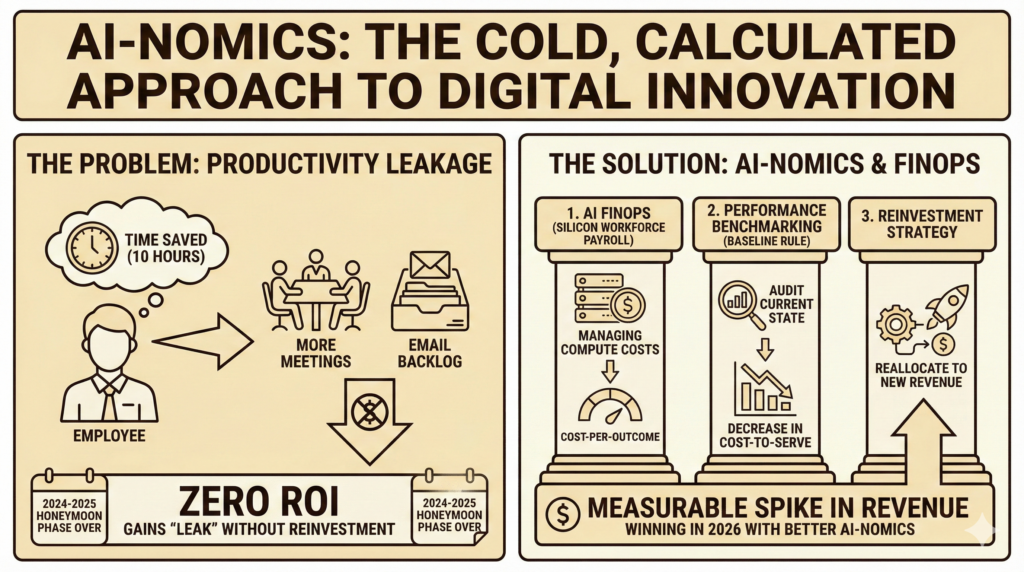
In this age of generative AI, where content and brand messaging can be spun up in moments, the value of real-world yardsticks – understanding your customers, empowering your staff, and partnering wisely – is more paramount than ever. It’s about ensuring your innovation leads to ROI benchmarks, improved outcomes and the lowest total cost of ownership, not just impressive tech demos.
The digital landscape is evolving at warp speed, and the opportunities are immense. But the real magic isn’t in the technology itself; it’s in how intelligently and purposefully it’s applied. Choose your partners wisely, focus on what truly matters to your business, and you might just find that transformation isn’t so daunting after all.